
AUTHOR

It’s that time of year again. April Fool’s Day.
The 24 hour window where B2B marketing departments across the globe collectively weigh up whether to set fire to their dignity.
It’s a precarious tightrope walk. Because for every genuinely clever stunt, there are ten more that land somewhere between confusing and corporate cringe.
Blunter B2B Marketing
At Sharper B2B Marketing, we’ve half-jokiningly toyed with the idea of creating an entire sub-brand called Blunter B2B Marketing for April Fool’s Day.
It made us laugh when the idea came up during one of our Midweek Mixers - internal sessions where we huddle together to fix industry headaches, play ideation games, or just see who has the most unhinged ideas (spoilers: it’s Jade. It’s always Jade).
And yet, the Blunter B2B Marketing concept was laughed off and filed away somewhere between “maybe there’s something in that” and “let’s never speak of this again.”
Well today, using April Fool’s Day as a thinly-veiled excuse to break the idea out of containment, let’s explore if there’s something in Blunter B2B Marketing.
[All served up with a healthy dose of some great and some truly awful April Fool’s Day campaigns]
 Can’t lie, I’d totally eat this.
The Blunter philosophy
The philosophy of Blunter started as a playful subversion of everything we hold dear at Sharper. We pride ourselves on creativity, and we take our Fresh Ideas and FirepowerTM tagline so seriously that we trademarked it.
Blunter strips all that away. No polish. No flourish. No pretending. Just the point.
Where Sharper is a precision instrument; Blunter is a comedically large mallet.
But, what started as a joke, actually taps into something real.
B2B copy, especially in the tech industry, has a bad rep for being beige. But really it’s just buried under layers of wordy nonsense. The Blunter B2B philosophy teaches us to stop the charade.
It’s about cutting right to the point with taglines that actually say what everyone is thinking. It’s a BS-free approach that realises that, ultimately, both parties know what’s going on here - we’re trying to sell you something. So why not lead with that?
Why does B2B BS itself?
There is a strange phenomenon in B2B tech where companies feel the need to describe their products as "game-changing," "transformative," or "revolutionary". Even though you’d have to squint pretty hard to tell them apart from their competitors.
It’s a predictable script that everyone has heard a thousand times before, and yet we all politely play along.
But that’s not the Blunter way!
Honesty - real honesty - in marketing is terrifying. It requires you to admit your limitations, what you’re not, and where you’re not perfect.
But from that comes something greater: the reason why you’re worth choosing anyway.
As a university lecturer once told me “what you can’t disguise, emphasise”. That’s probably the best advice I’ve ever received, and it’s central to the Blunter way of life.
Once we embrace our vulnerability, we discover a refreshing and liberating power in bluntness. In turn it leads us to absolute marketing gold like:
“Our product isn’t very exciting, so here’s a picture of a small dog in a hat”
...
This isn't just about being different; it’s about building a bridge of trust.
When you stop pretending to be perfect, people start believing you’re good, and they start opening up about their own challenges.
Because suddenly, your message doesn’t sound like everyone else’s.
It sounds human.
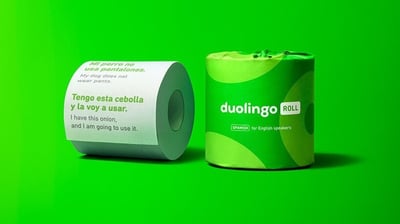 For chocolate whoppers of another kind.
Blunted on humility
Humility is a rare commodity in the corporate world. We’re taught to present everything as if it’s the best thing ever. The answer to all your prayers.
But some of the most endearing experiences come from brands that don't take themselves too seriously.
In B2B marketing, humility means acknowledging that your customer's time is valuable. It means realising that your finely-chiseled and polished-to-perfection message might actually be getting in the way of, well, the message.
When you’ve got a tiny, tiny window in which to grab someone’s attention. Use that time to be human.
But Blunter also knows when to stop. Because there’s a fine line between honest and reckless.
Ultimately (and wisely) we decided to park the whole concept. But only after we’d thrown around the idea of drafting in James Blunt to be the face of the campaign… “Emily Blunt is probably too expensive, right?”
We laughed, we pondered momentarily, we moved on.
Who is Blunter for?
Truthfully, it’s not for everyone.
But it might work for:
- The Straight-Talkers: Brands that admit their product/solution is a bit dull but are confident that it does the job perfectly well.
- The Simplifiers: Those who realise that jargon and corporate fluff just clogs up inboxes and not the sales pipeline.
- The Brave Ones: Companies that aren't afraid to stand out in order to get a point across, human to human.
These brands understand that if you don't grab attention quickly, you’re just background noise in an avalanche of content.
 Worryingly, this isn’t even an April Fool’s ad. Madness.
The verdict: Is it time to be blunter?
Honestly, probably not. And in terms of our own branding, we’ll stick with Sharper thanks very much.
But there’s definitely something in it.
A reminder that:
- not everything needs polishing
- not every message needs dressing up
- and sometimes, the most effective thing you can say is the simplest
So, it could be worth keeping some of those Blunter principles in mind the next time you’re trying to come up with an idea that stands out from the navy blue ocean of B2B blandness.