AUTHOR

The most powerful part of LinkedIn Ads isn't the first click
LinkedIn Campaign Manager has become the go-to advertising platform for B2B marketers. With powerful targeting capabilities, it's never been easier to reach decision-makers.
But despite all that sophistication, many marketers are still only using half of what the platform has to offer. We obsess over finding the perfect audience, adding just one more job title, refining company size, tweaking industries—convinced that better targeting will mean our campaign will be mega successful.
But after spending a lot of time building and optimising LinkedIn campaigns recently, I've realised that the best campaigns don't succeed because they target the right people.
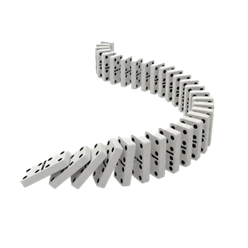
I picture it like a line of dominoes. The first click only knocks over the first tile. Every interaction that follows—another website visit, a video view, a content download, or a return to your pricing page—builds momentum towards a buying decision. The real value of LinkedIn isn't the first domino. It's understanding how to keep the chain reaction going.
Targeting gets people through the door. Retargeting keeps the conversation going
Can you remember the last time you invested in something expensive, like a holiday or a car finance deal? Chances are you didn't buy immediately. You compared options, read reviews, revisited websites, and weighed up your choices before making a decision, right?
B2B buying works in exactly the same way, except the journey is usually even longer and includes multiple stakeholders.
Yet many LinkedIn campaigns are still built around a single moment: getting someone to click an advert and hoping they'll immediately fill out a form or book a demo.
The click is often treated as the finish line, but in reality, it's usually just the beginning.
LinkedIn knows more than you think
One of the things that surprised me most when I started spending more time inside LinkedIn Campaign Manager is just how many buying signals it captures.
If you've installed the Insight Tag on your site, you can build audiences of people who have visited specific pages. But that's only scratching the surface.
You can also create audiences from people who have watched your videos, opened a Lead Gen Form without submitting it, downloaded an asset, attended one of your events, engaged with your ads, or interacted with your business in a variety of different ways.
Every interaction creates a signal. One signal on its own doesn't mean much, but together they create a picture of buying intent. The more signals someone gives you, the less you need to guess what they're interested in.
That's where LinkedIn becomes far more interesting than simply choosing a list of job titles.
Building campaigns around intent instead of audiences
This is where LinkedIn campaigns start to feel less like advertising and more like a streamlined sales process.
Instead of thinking about one audience, you should think about a series of conversations.
Someone who watched 75% of your video has shown a different level of interest to someone who simply scrolled past your advert. Someone who abandoned a Lead Gen Form has different questions to someone who's visited your pricing page three times.
They shouldn't all receive the same message. Instead, every interaction should answer the question they're most likely asking next.
Here’s a quick example; someone downloads your latest industry report through a Lead Gen form. Rather than continuing to serve them another advert promoting the same report, follow up directly via email with a relevant customer success story. If they later visit your pricing page, your next touchpoint could invite them to book a consultation or product demo.
The interaction and message evolves because the relationship has evolved—and that's the real value of retargeting.
The campaigns that waste the most budget
The most expensive LinkedIn campaigns aren't always the ones with the highest cost per click.
They're often the ones that keep saying the same thing to people who've already moved on in their decision-making. This isn’t nurturing, it’s just repetition.
Effective retargeting isn't about increasing impressions—it's about increasing relevance.
LinkedIn gives us, as marketers, all the tools we need to do this. So arguably, the challenge isn't the platform itself, it's building a strategy that reflects how people actually make buying decisions.

The first click is only the beginning
Accurate targeting will always matter. It builds the foundation of every successful LinkedIn campaign. But the best-performing campaigns don't stop there.
They recognise that buying decisions rarely happen after a single interaction. They use every click, every video view, every page visit, and every form interaction as another signal, adapting the next message to match the prospect's level of intent.
The marketers who pay attention to those signals, stop thinking in terms of audiences and start thinking in terms of momentum.
That's where LinkedIn Ads become far more than a targeting platform. They become a way to guide prospects through the buyer journey with relevant, timely messaging.